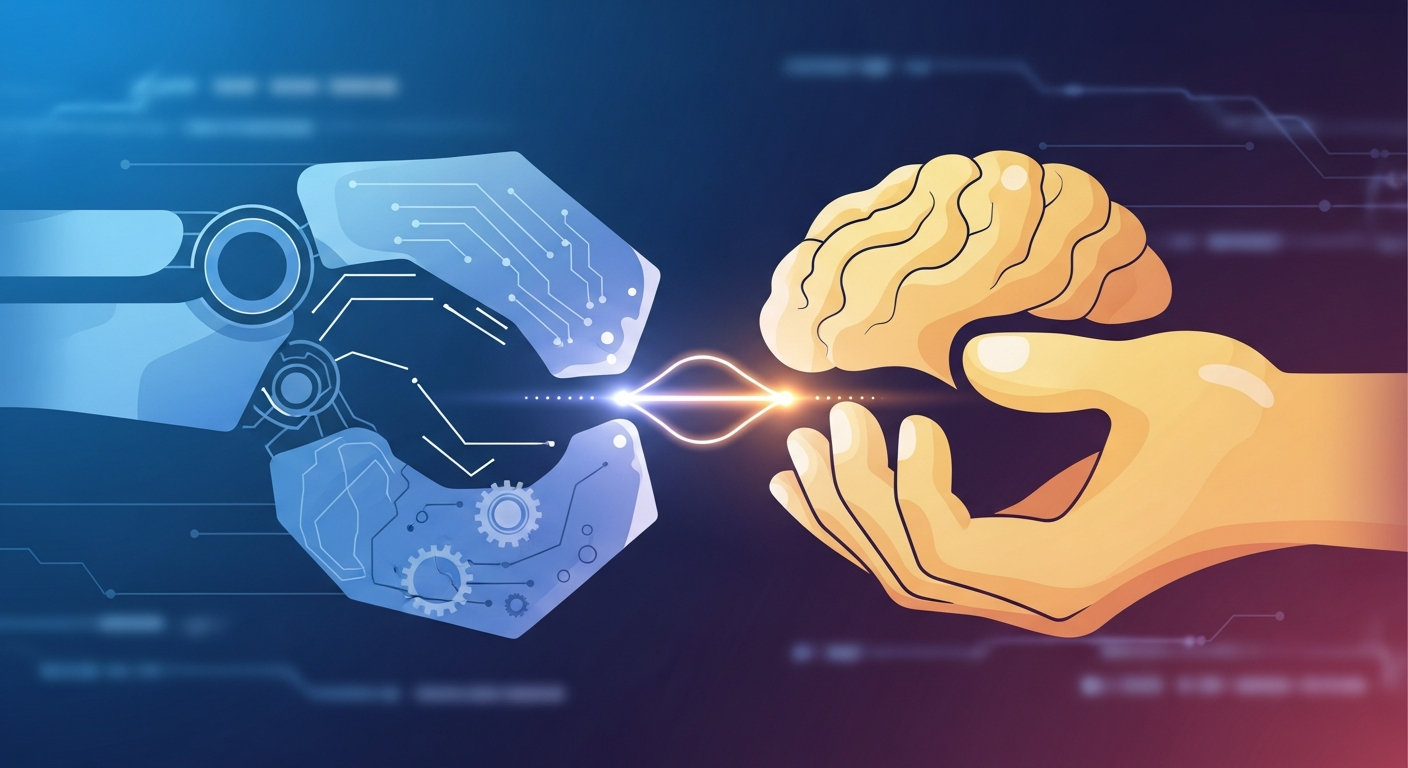
Understanding When AI Should Hand Off to Humans
In the dynamic landscape of multi-location service businesses – from bustling fitness studios and serene wellness centers to precise dental practices and compassionate veterinary clinics – the strategic integration of artificial intelligence (AI) has become a cornerstone of operational efficiency. However, the true art lies not just in deploying AI, but in understanding when AI should hand off to humans to ensure a seamless, empathetic, and effective customer journey. This article explores the critical decision points, frameworks, and best practices for optimizing this AI-human collaboration, transforming customer interactions into opportunities for deeper engagement and staff empowerment.
The optimal blend of AI efficiency and human empathy defines the future of service delivery.
The Dual Power: Why AI and Humans Must Collaborate
AI excels at consistency, speed, and handling high volumes of routine, predictable tasks. It can manage lead outreach, answer frequently asked questions, book appointments, and send follow-up communications with unwavering efficiency, 24/7. This capability ensures that no inquiry goes unanswered and no lead is left cold, providing a baseline of exceptional service.
However, humans bring an irreplaceable dimension: empathy, nuanced understanding, creative problem-solving, and the ability to build genuine relationships. Certain interactions demand a personal touch, emotional intelligence, or complex judgment that current AI, while sophisticated, cannot fully replicate. The goal is not to replace human staff but to empower them to focus on these high-value, human-centric tasks by offloading the repetitive, administrative burdens to AI.
For multi-location operators, this means standardizing the predictable while personalizing the critical. It's about designing a workflow where AI acts as the first line of engagement and a powerful support tool, intelligently escalating conversations to human team members precisely when needed.
Defining the Hand-Off Point: Criteria and Triggers
Identifying the precise moment for an AI-to-human hand-off is paramount to maintaining service quality and operational flow. This isn't a one-size-fits-all decision; it requires careful consideration of the interaction's nature, complexity, and emotional resonance. Many operators find that a clear set of criteria helps in establishing these triggers:
- Emotional Nuance: Does the inquiry convey frustration, urgency, distress, or a need for deep empathy? For instance, a client canceling a wellness session due to a personal tragedy requires a human touch, whereas a routine cancellation can be handled by AI.
- Complexity and Unpredictability: Is the request beyond the AI's programmed knowledge base or does it involve multiple variables that AI cannot logically process? A simple class booking is AI territory; a bespoke event request with specific dietary and accessibility needs might require human planning.
- Problem-Solving and De-escalation: Does the situation involve a complaint, a complex billing issue, or a conflict that requires negotiation, investigation, or a judgment call? AI can log the complaint, but a human needs to resolve it.
- Customer Preference: Has the customer explicitly requested to speak with a human? Respecting this preference immediately builds trust and prevents frustration.
- Compliance and Legal Considerations: Certain sensitive topics, particularly in dental or veterinary practices (e.g., discussing treatment options, legal consents), often necessitate a human conversation to ensure clarity and adherence to regulations.
- High-Value Interactions: For new client onboarding, complex sales discussions, or personalized wellness consultations, the human element can significantly enhance conversion and satisfaction.
"The true measure of AI's success in service is not how much it does, but how intelligently it knows when not to do it alone."
Framework: The AI-Human Collaboration Matrix
To systematically determine hand-off points, operators can leverage a decision-making framework. This matrix categorizes interactions based on their complexity and emotional intensity, providing a clear roadmap for AI and human collaboration.
| Interaction Type / Category | Low Emotional Need (Routine/Informational) | High Emotional Need (Sensitive/Urgent/Complex) |
|---|---|---|
| Simple / Routine Task | AI-Led Automation | AI Initiates, Human Takes Over Swiftly |
| (e.g., booking confirmation, FAQ, basic policy query, lead qualification) | Example: AI confirms a fitness class, answers gym hours. | Example: AI logs a client's request to cancel due to illness, immediately notifies staff to follow up with empathy. |
| Complex / Non-Routine Task | AI Gathers Information, Human Reviews/Finalizes | Human-First, AI Supports with Context/Data |
| (e.g., specific service questions, complex scheduling changes, billing inquiries) | Example: AI collects details for a custom dental procedure quote; human reviews and presents options. | Example: A pet owner calls with concerns about a pet's sudden symptoms; human takes the call, AI provides the pet's medical history. |
Applying the Matrix:
- AI-Led Automation (Quadrant 1): These are the bread-and-butter tasks where AI excels. AI Front Desk, for example, can fully automate lead outreach, initial inquiry responses, appointment bookings, reminders, and basic FAQ handling, ensuring consistent and immediate responses across all locations. This frees up staff significantly.
- AI Initiates, Human Takes Over Swiftly (Quadrant 2): In these scenarios, AI handles the initial interaction, acknowledges the emotional component, and then seamlessly transfers the conversation to a human. The AI's role is to ensure no message is missed and to set the stage for a human connection. AI Front Desk can identify keywords or sentiment that trigger these escalations, notifying staff in real-time.
- AI Gathers Information, Human Reviews/Finalizes (Quadrant 3): For more complex but less emotionally charged tasks, AI can act as an intelligent assistant, gathering all necessary data from the client. This pre-qualification saves human staff considerable time. Imagine AI collecting detailed patient history for a dental consultation before a human dentist reviews it.
- Human-First, AI Supports with Context/Data (Quadrant 4): These are situations where human intervention is critical from the outset. AI's role here is to provide the human agent with all available context—previous interactions, client history, preferences—so the human can step in fully informed and provide a personalized, empathetic response without asking redundant questions. This is where AI Front Desk's integration capabilities shine, pulling data from scheduling systems and CRM.
Practical Scenarios for Effective Hand-Offs
Let's explore hypothetical scenarios across different service business types to illustrate effective AI-human hand-offs.
Scenario 1: Fitness Studio - Membership Inquiry vs. Personal Support
- AI's Role: A prospect visits the website late at night, inquiring about membership tiers and class schedules. AI Front Desk's digital assistant immediately provides detailed information, answers common FAQs about facilities, and offers to schedule a tour or a free trial class. It also captures lead contact information and preferences.
- Hand-Off Trigger: During the AI interaction, the prospect mentions struggling with motivation due to a recent personal setback and expresses hesitation about joining.
- Human's Role: AI Front Desk identifies the emotional keywords, pauses the automated flow, and notifies a membership advisor, transferring the full chat history. The advisor follows up personally, acknowledging their struggles, offering a compassionate ear, and inviting them for a personalized, non-salesy chat about their goals and how the studio can provide a supportive community. This builds trust and rapport far beyond what AI could achieve alone.
Scenario 2: Dental Practice - Appointment Management vs. Urgent Care
- AI's Role: AI Front Desk sends automated appointment reminders, confirms existing appointments, and allows patients to reschedule routine check-ups via text or portal. It can also answer basic questions about common procedures or insurance FAQs.
- Hand-Off Trigger: A patient responds to an appointment reminder with a message stating they are experiencing severe tooth pain and swelling.
- Human's Role: The AI system immediately flags this as an urgent medical concern. It alerts the front desk staff or a designated triage nurse, providing the patient's name, contact information, and their exact message. The human team can then swiftly call the patient, assess the urgency, and arrange for an emergency appointment or advise on immediate steps, demonstrating responsive and compassionate care.
Scenario 3: Veterinary Clinic - Routine Prescription Refill vs. Pet Health Concern
- AI's Role: A pet owner uses the clinic's online portal to request a routine refill for their pet's chronic medication. AI Front Desk processes the request, checks the pet's records for eligibility, and informs the owner when the prescription will be ready for pick-up.
- Hand-Off Trigger: While requesting the refill, the owner adds a note expressing concern about a new, unusual cough their pet has developed.
- Human's Role: AI Front Desk recognizes the mention of a new symptom. It confirms the refill request but simultaneously creates a task for a veterinary technician or veterinarian. The human staff member reviews the pet's history and proactively contacts the owner to discuss the cough, potentially scheduling an examination. This proactive human intervention can catch potential health issues early, strengthening the client-clinic bond.
Scenario 4: Wellness Center - Class Registration vs. Special Needs Accommodation
- AI's Role: AI Front Desk manages online class registrations, waitlists, and sends pre-class instructions for various wellness offerings like yoga, meditation, or Pilates. It can also answer general questions about class styles or instructor availability.
- Hand-Off Trigger: A client registers for a new yoga class and, in the process, inquires about wheelchair accessibility or specific modifications for a recent injury.
- Human's Role: The AI system identifies keywords related to accessibility or medical conditions. It completes the registration but then alerts the wellness coordinator or lead instructor, providing the client's details and specific request. The human staff member can then personally follow up, discuss specific accommodations, ensure the space is ready, and make the client feel truly welcomed and understood.
Implementing Seamless Hand-Offs with AI Automation
Effective AI-human hand-offs don't happen by chance; they are the result of thoughtful design and robust technology. AI automation tools, like AI Front Desk, are engineered to facilitate these transitions.
- Clear Escalation Paths: The platform can be configured to identify specific keywords, phrases, or sentiment in conversations that trigger an immediate hand-off. For example, "emergency," "pain," "complaint," or "speak to a human" can be set as instant escalation triggers.
- Context Transfer: When a hand-off occurs, AI Front Desk ensures that the human agent receives a complete transcript of the AI conversation, along with relevant customer data (name, contact info, service history, previous interactions) pulled from integrated scheduling or CRM systems. This eliminates the need for customers to repeat themselves, creating a smooth transition.
- Defined Human Roles and Notifications: The system can route escalated inquiries to the appropriate human team member or department (e.g., sales, support, clinical staff). Automated notifications (email, SMS, internal dashboard alerts) ensure that the right person is aware and can take over promptly.
- Feedback Loops for Continuous Improvement: Implementing a system where human agents can provide feedback on AI-led interactions (e.g., "AI handled well," "Needed human intervention," "AI misidentified intent") allows for continuous refinement of AI's capabilities and hand-off logic.
- Integration with Existing Workflows: AI Front Desk integrates with many existing scheduling systems, CRMs, and communication platforms. This means hand-offs can be built directly into current operational workflows, making adoption easier for staff.
Quick Wins for Optimizing AI-Human Hand-Offs Today
Operators can take immediate steps to improve their AI-human collaboration:
- Audit Your Communication Channels: Identify the top 5-10 most common inquiries and their associated emotional intensity. Which ones are purely informational? Which require empathy or complex problem-solving? This helps map potential AI and human domains.
- Draft Simple Hand-Off Protocols: For your top 3-5 high-volume, high-value scenarios, create a brief flowchart: "If [X happens], AI does [Y], then AI notifies [Human Z] with [Context A, B, C]."
- Educate Your Staff on AI's Capabilities: Host a short workshop explaining what your AI tools can and cannot do. Empower staff to understand AI as a helpful partner, not a competitor, and train them on how to effectively take over from AI.
- Implement a Customer Feedback Prompt: After a hand-off, consider a quick, optional survey question: "Was your query resolved effectively by our team?" or "Did the transition feel smooth?" This provides invaluable direct feedback.
- Pilot AI in a Contained Environment: Start by deploying AI for a specific, well-defined set of tasks (e.g., new lead qualification or routine appointment confirmations) in one location. Observe, refine hand-off points, and then scale.
Common Pitfalls to Avoid
Even with the best intentions, certain mistakes can undermine the effectiveness of AI-human hand-offs:
- Over-reliance on AI for Complex Issues: Pushing AI to handle situations beyond its current capabilities can lead to frustration for customers and a negative perception of your brand.
- Lack of Clear Protocols: Ambiguity around when and how to hand off creates confusion for both AI and human staff, resulting in dropped balls or delayed responses.
- Poor Context Transfer: If human agents receive an inquiry from AI without the full conversational history or relevant customer data, they have to ask repetitive questions, leading to a frustrating experience.
- Insufficient Staff Training: If staff are not adequately trained on how to collaborate with AI, they may feel threatened, unprepared, or simply bypass AI, negating its benefits.
- Ignoring Feedback Loops: Without a mechanism to learn from hand-off experiences, the system won't improve, and recurring issues will persist.
- One-Size-Fits-All Approach: Different locations or service offerings within a multi-location business may have unique needs. Failing to tailor hand-off protocols can lead to inefficiencies.
The AI Front Desk Advantage
AI Front Desk is designed precisely to address these challenges, enabling multi-location service businesses to master the art of AI-human collaboration. By automating lead outreach, follow-up, and appointment booking 24/7, it handles the bulk of routine communications, ensuring consistency and immediate response. Its ability to manage member retention communications and win-back campaigns means AI can also trigger human intervention for sensitive cases or high-value clients.
Integration with scheduling systems reduces no-shows and optimizes capacity, while its intelligent routing ensures that when a hand-off is needed, the human team receives comprehensive context. This powerful platform empowers staff to focus on delivering exceptional in-person service and building relationships, knowing that routine communications are handled professionally and consistently across all locations. It’s about leveraging AI as a force multiplier, enhancing both efficiency and the invaluable human touch.
Conclusion
The strategic integration of AI in multi-location service businesses is not about choosing between technology and human interaction, but about optimizing their powerful synergy. Understanding when AI should hand off to humans is a critical skill for modern operators, ensuring that efficiency never comes at the expense of empathy and that every customer interaction, regardless of its origin, contributes to a positive brand experience. By establishing clear protocols, leveraging intelligent automation, and fostering a collaborative environment, businesses can unlock new levels of service excellence and operational efficiency, solidifying their position as leaders in their respective industries.