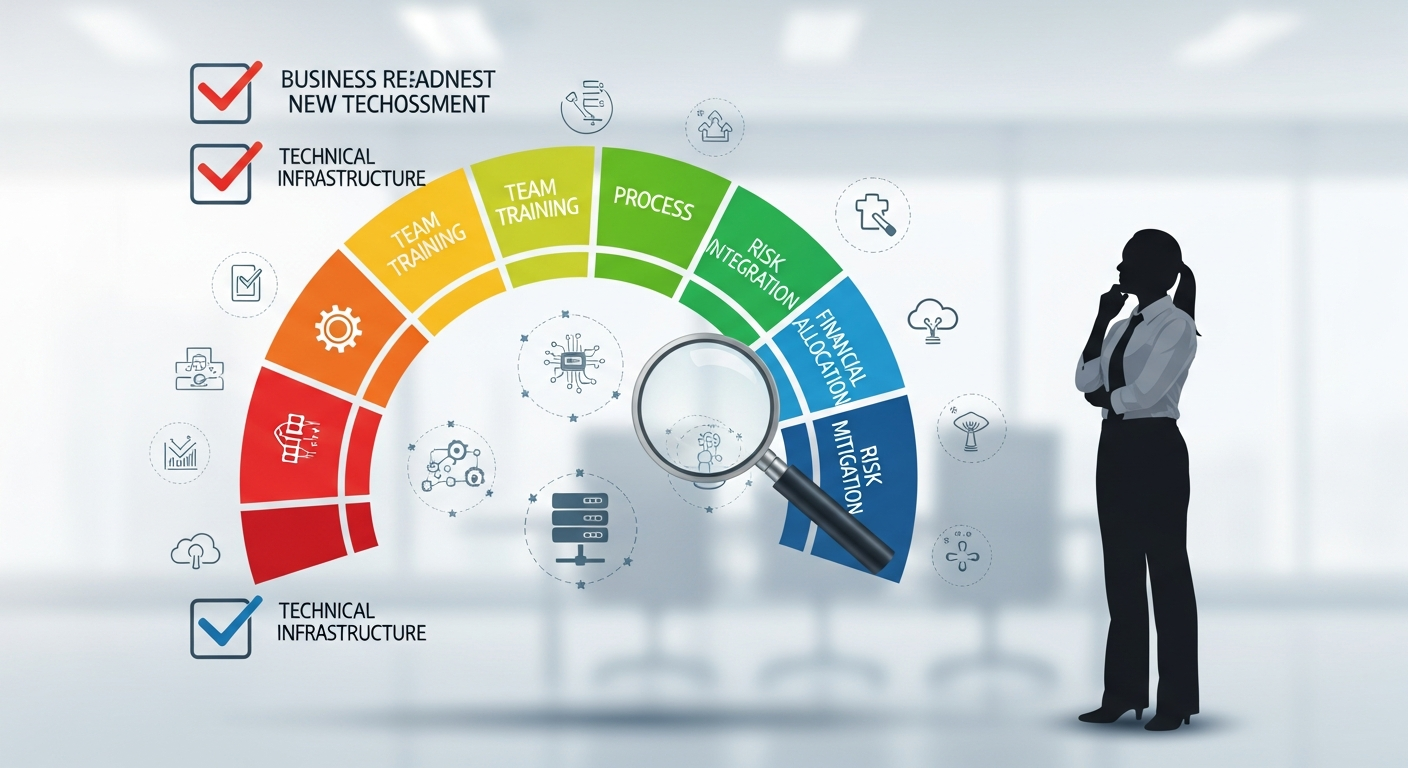
How to Decide If Your Business Is Ready for AI
Summary: Navigating the integration of Artificial Intelligence into multi-location service businesses requires more than just technological interest; it demands a strategic assessment of operational maturity, leadership vision, and team readiness. This article provides a comprehensive framework for multi-location operators across fitness, wellness, dental, and veterinary sectors to evaluate if their organization is truly prepared to leverage AI for enhanced efficiency, customer experience, and consistent service delivery. We explore key decision-making pillars, critical change management considerations, and actionable steps to ensure a successful AI adoption journey.
Navigating the AI Frontier in Multi-Location Service Businesses
The landscape of multi-location service businesses, from bustling fitness studios to meticulous dental practices and compassionate veterinary clinics, is constantly evolving. In this dynamic environment, the prospect of Artificial Intelligence (AI) emerges as a powerful catalyst for operational transformation. But for many operators, the question isn't if AI will play a role, but rather, "How to Decide If Your Business Is Ready for AI?"
Embracing AI is not merely about adopting new software; it's a strategic decision that impacts leadership, team management, and the overall trajectory of an enterprise. It's about discerning where AI can genuinely enhance human effort, streamline processes, and deliver a consistently superior customer experience across all locations, rather than simply chasing a trend. This article will provide a structured approach to assessing your organization's readiness, focusing on the critical considerations that underpin a successful AI integration.
The Strategic Imperative: Why Evaluate AI Readiness?
In today's competitive service economy, businesses are continually seeking avenues to optimize resource allocation, reduce operational overhead, and elevate client satisfaction. AI offers compelling potential in these areas by automating routine, repetitive communications and tasks that often consume valuable staff time. For multi-location businesses, the consistency offered by AI can be a significant differentiator, ensuring every client interaction, regardless of location, aligns with brand standards.
Evaluating AI readiness is a proactive strategic exercise. It allows leadership to identify specific pain points AI can address, forecast potential efficiencies, and prepare the organizational culture for change. It's about setting clear objectives, understanding the trade-offs, and ensuring that any AI implementation serves the overarching business goals – whether that's increasing lead conversion, improving client retention, or empowering staff to focus on high-value in-person services.
Leadership Vision: Setting the Stage for AI Adoption
Successful AI integration begins at the top. Leadership must articulate a clear vision for how AI will serve the business's strategic objectives. This isn't just about investing in technology; it's about leading a fundamental shift in how the business operates and interacts with its clients.
"Leadership's role in AI adoption transcends technology selection; it's about envisioning a future where AI empowers the organization to achieve its strategic objectives, fostering a culture of informed innovation."
Key leadership responsibilities include:
- Defining Strategic Goals: What specific business challenges or opportunities will AI address? Is it lead generation, appointment scheduling, member retention, or a combination?
- Resource Allocation: Committing necessary financial, human, and time resources for evaluation, implementation, and ongoing management.
- Cultural Alignment: Championing the change, communicating the benefits to staff, and creating an environment where staff feel supported in adopting new tools.
- Risk Management: Identifying potential challenges, such as data privacy concerns or integration complexities, and developing mitigation strategies.
Without a clear, well-communicated vision from leadership, AI initiatives risk becoming isolated projects that fail to gain traction or deliver their full potential.
Organizational Assessment: A Framework for AI Readiness
Before committing to any AI solution, a thorough internal assessment is prudent. This framework helps evaluate key organizational areas to determine current capabilities and identify potential gaps.
AI Readiness Assessment Framework: Key Pillars
| Assessment Pillar | Key Questions for Your Business | Readiness Indicators (Self-Score 1-5, 5 being High) |
|---|---|---|
| 1. Operational Maturity & Digital Infrastructure | - Are core business processes (e.g., lead capture, booking, follow-up) clearly defined and documented? | |
| - Do you have robust, integrated scheduling, CRM, or POS systems? | ||
| - Is your data clean, organized, and accessible across locations? | ||
| 2. Team Capacity & Mindset | - Is your team open to adopting new technologies? | |
| - Do staff members spend significant time on repetitive administrative tasks? | ||
| - Are there internal resources available for training and supporting new systems? | ||
| 3. Customer Experience & Communication Gaps | - Do clients frequently encounter delays in getting responses or booking appointments? | |
| - Is communication inconsistent across your different locations or channels? | ||
| - Do you struggle with lead follow-up or member retention communications? | ||
| 4. Financial & Resource Allocation | - Is there a budget allocated for technology investments and potential external support? | |
| - Are you prepared to allocate internal staff time for initial setup, learning, and oversight? | ||
| 5. Strategic Alignment & Competitive Advantage | - How would AI directly support your long-term growth objectives (e.g., expansion, market share)? | |
| - Are competitors leveraging similar technologies, or is there an opportunity for differentiation? |
**Interpretation Guide:**
*   **Scores of 4-5 in most pillars:** Your business exhibits strong readiness. You likely have established processes, an adaptable team, and clear areas where AI can deliver immediate value.
*   **Scores of 2-3 in several pillars:** You have potential, but may need to address process gaps, invest in data hygiene, or prepare your team more thoroughly before full-scale AI adoption.
*   **Scores of 1-2 in most pillars:** Fundamental work on operational processes, digital infrastructure, or team culture may be necessary before AI can be effectively implemented.

This framework is not a pass/fail test but a diagnostic tool. It helps identify strengths to build upon and weaknesses to address. For instance, if your customer communication is inconsistent across locations, or your team is overwhelmed with lead follow-up, an AI solution designed for automated lead outreach and consistent communication, such as AI Front Desk, could directly address these challenges.

### Change Management: Guiding Your Team Through AI Transformation

Implementing AI invariably introduces change, and how this change is managed can significantly impact success. It's crucial to acknowledge that team members may have concerns about job security, learning new systems, or the perceived "dehumanization" of customer interactions. Effective change management addresses these concerns head-on.

#### Key Principles for Successful AI Change Management:

1.  **Transparent Communication:** Clearly articulate *why* AI is being introduced, *what* it will do, and *how* it will benefit both the business and individual staff members. Emphasize that AI is a tool to empower staff, taking over repetitive tasks so they can focus on high-value, in-person client engagement.
2.  **Early Involvement:** Engage key team members in the evaluation and planning process. Their insights into day-to-day operations can be invaluable, and their early buy-in can transform them into internal champions.
3.  **Comprehensive Training and Upskilling:** Provide clear, accessible training on how to interact with the AI system, what its capabilities are, and how it changes existing workflows. Highlight opportunities for staff to develop new skills, such as AI oversight, optimization, or deeper client relationship management.
4.  **Phased Implementation:** Many operators find it beneficial to introduce AI in stages, perhaps starting with one location or a specific function (e.g., lead qualification) before expanding. This allows for learning, adjustments, and building confidence within the team.
5.  **Feedback Loops:** Establish mechanisms for staff to provide feedback on the AI's performance and integration. This demonstrates respect for their experience and allows for continuous improvement.

> "The human element remains paramount. AI integration is most successful when it's framed as an augmentation, not a replacement, of your dedicated team."

AI Front Desk, for example, is designed to handle routine communications, allowing staff to focus on the in-person service where human connection is irreplaceable. This narrative is crucial for team acceptance.

### Identifying Key Areas for AI Impact in Service Businesses

Multi-location service businesses face common challenges that AI automation is particularly well-suited to address. Assessing your readiness also involves pinpointing these high-impact areas.

*   **Lead Outreach and Qualification:** Many businesses struggle with consistent and timely follow-up on new leads. An AI system can engage leads 24/7, answer initial questions, qualify interest, and even book discovery calls or introductory appointments, ensuring no lead is left unattended. This significantly enhances the sales funnel.
*   **Appointment Booking and Management:** Manual appointment scheduling is time-consuming and prone to errors. AI can integrate directly with existing scheduling systems, allowing clients to book, reschedule, or cancel appointments independently, reducing no-shows and optimizing capacity.
*   **Member Retention Communications:** Proactive communication with existing clients is vital for retention. AI can automate personalized check-ins, reminders, feedback requests, and win-back campaigns for lapsed members, ensuring consistent engagement across all locations.
*   **Consistent Customer Support:** Clients expect instant answers to common questions. AI can serve as a front-line support agent, providing immediate, accurate, and professional responses to FAQs, freeing up staff for more complex inquiries.
*   **Operational Consistency Across Locations:** Maintaining a uniform brand experience is a challenge for multi-location businesses. AI ensures that every automated interaction aligns with brand guidelines, tone, and information accuracy, delivering a consistent client experience regardless of which location they interact with.

By evaluating which of these areas represent the biggest drain on staff time or the largest source of customer friction, you can identify the most impactful starting points for AI integration.

### Common Pitfalls to Avoid in Your AI Journey

While the potential of AI is vast, operators should be aware of common missteps that can hinder successful implementation.

1.  **Lack of Clear Objectives:** Deploying AI without a specific problem to solve or a clear goal can lead to wasted resources and disillusionment. Begin with the 'why.'
2.  **Underestimating Change Management:** Overlooking the human element and failing to prepare staff for new workflows is a frequent pitfall. Technology alone cannot drive success; people must be on board.
3.  **Ignoring Data Quality:** AI systems rely on data to function effectively. Poor quality, inconsistent, or siloed data can lead to inaccurate responses and poor performance. Prioritize data hygiene.
4.  **Expecting a "Set It and Forget It" Solution:** While AI automates tasks, it still requires oversight, monitoring, and periodic optimization to ensure it continues to meet business needs and adapt to evolving client expectations.
5.  **Choosing the Wrong Partner:** Selecting an AI solution that doesn't integrate with existing systems, lacks industry-specific features, or offers inadequate support can create more problems than it solves. Look for platforms designed specifically for your business type, like AI Front Desk, which specializes in multi-location service businesses.
6.  **Failing to Define Success Metrics:** Without clear KPIs (Key Performance Indicators) to measure the impact of AI (e.g., lead conversion rate, appointment no-show rate, staff time saved), it's difficult to assess ROI and justify further investment.

### Quick Wins: Actionable Steps Towards AI Readiness Today

Even if a full-scale AI implementation seems daunting, there are immediate actions your business can take to begin its journey toward AI readiness.

1.  **Conduct a "Communication Audit":** Map out all routine, repetitive communications your staff handles daily (e.g., initial lead inquiries, appointment confirmations, membership renewal reminders). Identify which ones are high-volume, low-complexity, and consume significant staff time. This highlights prime candidates for AI automation.
2.  **Review Your Digital Infrastructure:** Assess your current CRM, scheduling, and communication platforms. Are they integrated? Is your customer data centralized and clean? A strong digital foundation is crucial for seamless AI integration.
3.  **Educate Your Leadership Team:** Dedicate time for leadership to explore how AI is transforming service industries. Share articles, case studies (generic, non-brand specific), and discuss the strategic implications for your specific business model.
4.  **Identify a Single "High-Friction" Point:** Pinpoint one specific area where clients frequently encounter delays or staff are consistently overwhelmed (e.g., after-hours booking requests). This can be a focused test case for future AI solutions.
5.  **Gather Team Feedback:** Talk to your front-line staff about their most time-consuming administrative tasks and what they believe prevents them from providing more personalized client service. Their insights are invaluable for identifying where AI can genuinely assist.

### Conclusion: Strategic Evolution, Not Just Technological Adoption

Deciding if your business is ready for AI is a multifaceted strategic endeavor that extends far beyond the technology itself. It involves a critical look at your operational maturity, the adaptability of your team, the clarity of your leadership vision, and your willingness to embrace change. For multi-location service businesses, the consistent and scalable automation offered by platforms like AI Front Desk presents a significant opportunity to streamline operations, enhance customer engagement, and empower staff.

By approaching AI adoption with a clear strategy, a supportive leadership, and a well-prepared team, your business can unlock new levels of efficiency and deliver an unparalleled client experience across all your locations. The journey toward AI readiness is an ongoing process of assessment, adaptation, and continuous improvement, positioning your business not just for today's market, but for sustained success in the future.