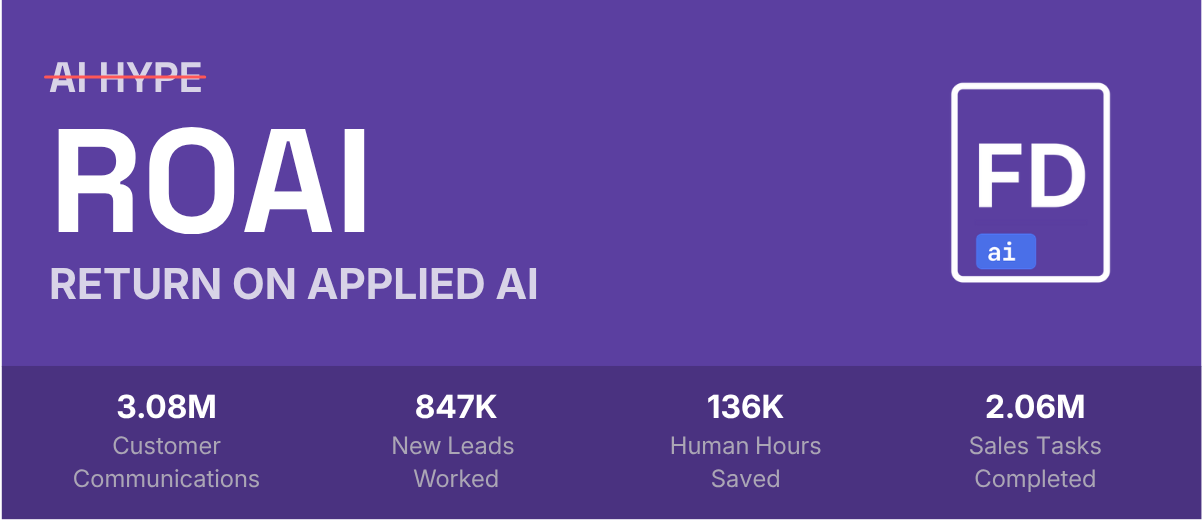
They sold magic.
I got a message on LinkedIn this week from a company in our space. I own locations too, so I get the same pitches you do.
The first line was a lie. Not a stretch. A lie. I know how their product works, and there is no version of me signing up and getting the result they promised.
Maybe it's a fine product. Doesn't matter. Nobody who buys it is getting what that message said they would.
That's where a failed AI project starts. Not at rollout. Right there, in the pitch.
So if you bought something these last two years and it never did what you were told it would do, you're not crazy. You probably didn't buy a bad tool. You bought a promise nobody could keep.
Here's how we got here. Companies raised a lot of money. Money buys a sales team. A sales team has to show growth whether the market is ready or not. Meanwhile boards were telling their executives to go pilot AI. So everybody went shopping for AI instead of shopping for an answer.
That's backwards. Never add a cost that doesn't solve a problem.
Walk in with the problem first. That's how we started. Not with a technology. With a problem. Leads were converting worse than they had in 2023 and front desk hiring was brutal. We tried a couple of things that didn't work. The AI came later, and only because we already knew what we needed it to do.
The risk: when somebody oversells you, you're not the only one who pays. You brought it in. You told your team it would work. When it doesn't, you're the one who looks bad.
So before the next demo, ask why you're taking the meeting at all. If you can't name the problem, you're shopping.
And once you've named it, let the people doing the job tell you whether the fix is real. Ask them before you sign, not after. If they're not sold, you can still move forward. You'll just have to win them over first, because it only works if they use it.

The stories worth carrying into next week.
Practical signals about what makes AI useful after the sales pitch is over.
Our take: Most of the projects that worked had failed once before, and that first flop is what taught them what to fix. The people who slowed things down weren't the front desk, it was legal and HR. So if you've only talked to the people who'll use it, you've talked to half the building.
Our take: They treated what the tool couldn't do as information instead of a gap to close. The stuck questions were telling them what customers actually wanted and what their people were for. Most of us never look. Go pull your escalations from this month. That's a list of what your customers want from a person, and you already have it.
Our take: So here's the question that sorts it. Ask them to show it finishing a whole job on your own data, start to finish, without a person stepping in partway. A chatbot answers. An agent finishes. If what you get instead is a demo account and a roadmap, you're buying a plan.
Here is a sales pitch. List exactly what it promises, in plain language. For each promise, tell me what would have to be true in my business for that to actually happen. Then list what the pitch does not say.
Ask for what it doesn't say. That's the useful part. What's missing is almost always what the thing needs from you: clean data, somebody to own it, a process that already works. None of that goes on the slide. Walk in with that list and the demo turns into a conversation.
Now one person can ask about a refund while somebody else asks what got decided last Tuesday, and nobody has to interrupt anyone. It doesn't matter that one of you uses Claude and the other uses ChatGPT. They're reading the same pages. We've been doing this recently and it's one of the most useful things we've changed about how we work.

That's it for today. See you soon.
Brian, Murphy, John, Beth, and Jake, some of the humans behind AI Front Desk.